
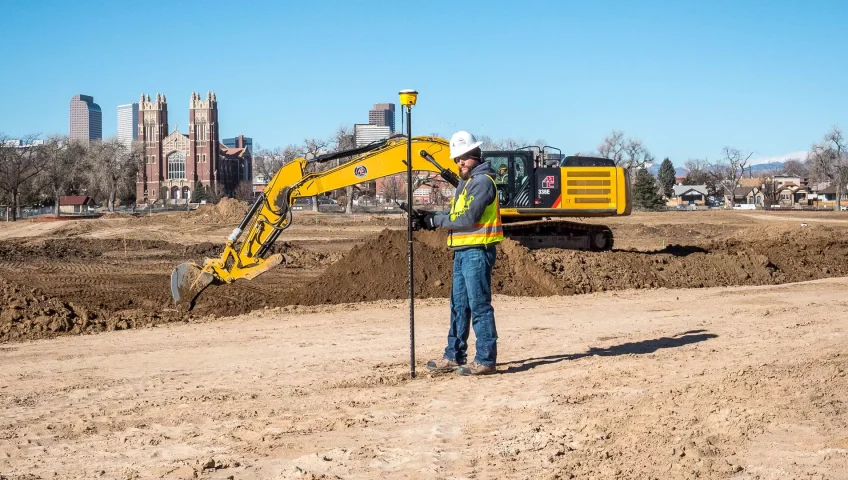
The construction industry is experiencing a technology revolution. Artificial Intelligence (AI) in construction is no longer future technology — it’s delivering measurable results today on active jobsites across Colorado, New Mexico and far west Texas. Forward-thinking contractors integrating AI into workflows gain competitive advantages with reduced downtime, enhanced worker protection and faster project completion.
How Artificial Intelligence Is Revolutionizing Construction Project Management
Construction projects generate massive data streams from equipment sensors, drone imagery, safety cameras and scheduling systems. AI construction technology transforms this raw information into actionable intelligence that drives better decision-making across all project phases.
Real-time analysis identifies patterns that human operators miss and recommends actions that keep projects on time and budget. These AI tools amplify professional capabilities by eliminating repetitive tasks and providing data-driven decision support. Trimble’s AI-enhanced solutions automatically process this data to deliver insights that improve safety, reduce costs and optimize planning. The company’s agentic AI platform integrates machine learning across design, construction and operations phases, connecting field data with cloud-based analytics to create a unified digital ecosystem.
Core Benefits of AI Integration for Construction Firms
Forward-thinking contractors gain three primary advantages when they deploy construction automation and AI across operations.
Enhanced Safety Through Computer Vision Monitoring
AI-powered computer vision systems continuously monitor construction sites, detecting safety violations before accidents occur. Machine control systems with integrated safety features process video feeds from drones and fixed cameras to identify risks in real time, such as:
- Workers without required PPE: AI systems detect missing hard hats, safety vests or other required personal protective equipment across multiple zones simultaneously.
- Fall risk detection: Computer vision identifies unsafe body positions indicating potential fall hazards before incidents occur.
- Equipment proximity hazards: The system monitors dangerous interactions between workers and heavy machinery in active work zones.
- Multi-zone compliance monitoring: AI tracks PPE compliance violations across multiple zones and issues automated alerts.
- Incident documentation: Safety events trigger immediate supervisor intervention with timestamped evidence for training and compliance purposes.
Reduced Costs Through Predictive Equipment Maintenance
Equipment breakdowns are among the highest controllable costs in construction. AI predictive maintenance forecasts component failures weeks before they occur by analyzing sensor data from engine control units, hydraulic systems and operating parameters.
Machine control systems with AI capabilities monitor coolant temperatures, hydraulic pressure trends, fuel consumption patterns and vibration signatures across every piece of equipment. When sensors detect gradual temperature increases or pressure anomalies over several weeks, the system flags the developing issue before equipment failure occurs. Maintenance teams schedule repairs during planned downtime rather than facing emergency breakdowns that halt project progress.
Improved Planning With AI-Optimized Resource Scheduling
AI scheduling tools from Trimble process project data to identify critical path activities, predict delays and recommend resource reallocations. These systems analyze historical data from your completed projects, identifying patterns that help contractors optimize future work. When weather delays hit a New Mexico commercial site, for example, AI scheduling tools identified optimal crew reallocation within minutes, maintaining project timelines and avoiding costly penalties.
Real-World Applications Delivering Results Today
Digital transformation doesn’t require wholesale technology replacement. Contractors already using Trimble solutions can activate AI capabilities within existing platforms to start seeing immediate benefits.
Automated Progress Tracking Through Drone Imagery
Traditional progress tracking requires project managers to walk sites manually to document completed work. AI-powered drone solutions automate this workflow by analyzing imagery captured during regular flights. The AI compares current conditions against design models, quantifying work in place across earthwork, concrete pours, steel erection and mechanical, electrical and plumbing rough-in categories.
Project teams receive percent-complete reports by location within hours, enabling data-driven decisions about resource allocation and schedule adjustments.
How to Use AI in Construction: Implementation Strategies
Understanding how to use AI to improve construction productivity starts with evaluating your existing technology ecosystem. Determine what data you’re already collecting from equipment telematics, project management software and site documentation systems. Many contractors already have equipment with sensors and telematics systems. The key is connecting these data sources to AI analytics platforms.
Implementation specialists can help contractors focus initial efforts on applications with a clear ROI:
- Predictive equipment maintenance: This delivers measurable cost reductions quickly with operational systems deployed in 30 days.
- Safety monitoring systems: Computer vision demonstrates immediate benefits for your workforce, with deployment typically in two to three weeks.
- Drone-based progress tracking: Automated analysis provides intelligence advantages with ROI typically visible within 60 days.
- Cloud-based AI scheduling: Resource optimization tools streamline crew scheduling and maximize efficiency, with improvements typically achieved within 60 to 90 days.
Proven Strategies to Boost Construction Productivity With AI
Trimble continues expanding AI capabilities across its construction technology portfolio, with proven applications that contractors can implement immediately. During the design and planning phases, AI-powered tools help teams visualize concepts and automatically extract critical information, reducing preparation time and accelerating project timelines.
These tools deliver measurable productivity gains across the project life cycle. From predictive maintenance that prevents costly equipment failures to automated progress tracking that keeps projects on schedule, AI applications provide the competitive advantages that forward-thinking contractors need.

Partner With Construction Technology Innovators
SITECH Rocky Mountain helps forward-thinking contractors future-proof their operations with Trimble’s AI-powered construction technology across Colorado, New Mexico and far west Texas. Our team combines expertise in construction workflows with comprehensive knowledge of Trimble’s technology ecosystem, helping you identify the right AI applications for your specific operational needs.
Whether you’re interested in predictive equipment maintenance, AI-enhanced safety monitoring, automated progress tracking or intelligent project management tools, AI in construction is delivering results today.
Explore how AI-powered construction technology can improve safety, reduce costs and enhance planning across your projects. Contact SITECH Rocky Mountain to schedule a consultation.